

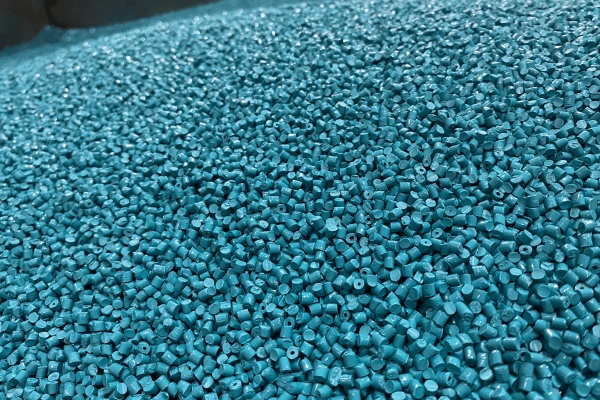
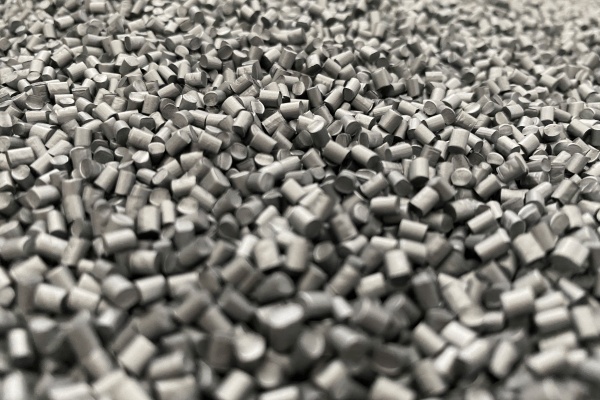
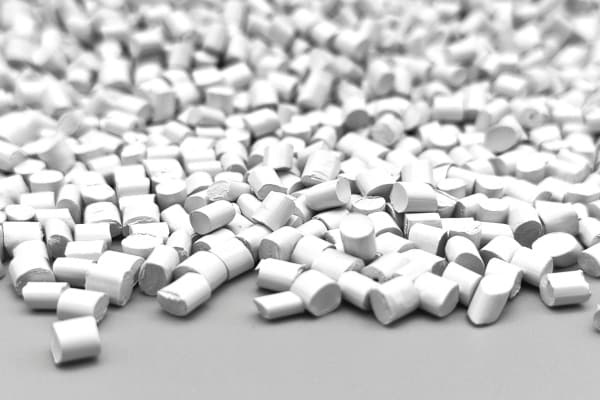
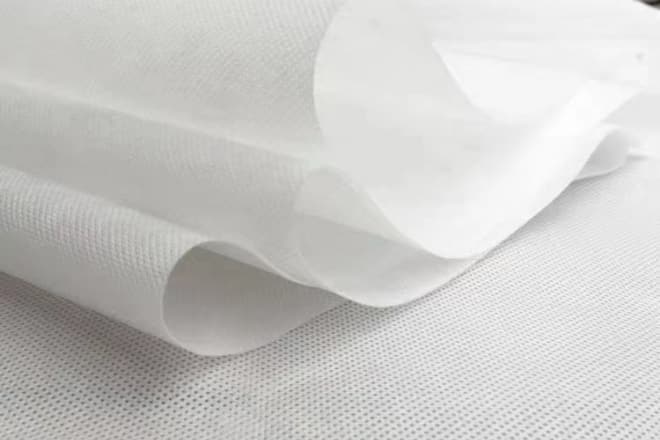
Over 20 years of professional manufacturing history, Standard Polymer has become one of the leading suppliers of quality masterbatch products in China. Our company consists of several specialists with expertise gained from working in foreign companies such as U.S. manufacturers.
Practice proves that in various processing conditions, the use of our masterbatch ensures outstanding performance of dispersion, coloring, and stability, thus allowing our customers to make fewer tests and decrease defects.
During production of cast films, the dispersion of masterbatch should be ensured while maintaining transparency and mechanical characteristics of film. According to our practice, production of CPE cast film using our masterbatch product results in stable thickness and allows speeding up the process by 10-15%.
For making blown films, our company’s masterbatch places much importance on dispersibility and tensile properties of our masterbatch. Tests conducted by us have proven that the TPU blown film made using our masterbatch is possible to achieve 2-3 silk (20-30 microns) thickness. The dispersion will be excellent, meeting the required tensile strength and breathability, giving smooth film without any color difference.
In coating and lamination films, the dispersibility of masterbatch at relatively low temperatures should ensure the good adhesion and gloss of the final product. Besides high dispersibility and stability of the masterbatch, it can meet ISO 10993 standards. This can help customers pass their tests in the first try.
When it comes to launching a new product or refreshing a hero line,te right packaging partner makes all the difference.Here’s why brands around the world choose to work with us.
We use unique “molecular-level pre-wetting” encapsulation technique in our products. Masterbatch pigments are well-dispersed within the polymer, similarly to how chocolate powder dissolves well in heated milk, preventing agglomeration and doubling screen change intervals.
The results of high intensity exposure of our outdoor mulch films or outdoor packaging films for months under rigorous UV aging tests show that the rate of color fading was maintained at 3%, ensuring that the visual quality of our final products is preserved perfectly.
It is very common among many of our colleagues who face the challenges of "frosting" or blooming of the slip agent or antistatic agent on their films. We have successfully found the balance of migration by controlling both hydrophobic and hydrophilic groups of our additive.
We understand that the chemical engineers understand the equipment and how to properly run the process; we can be in your plant running the process based on the screw profile and shear block setting of your extruder.
There is no such thing as "all-one-size-masterbatch". No matter whether you require our masterbatch to comply with food regulations or have a special requirement for draw ratio, our formulae are ready in 3 days.
Any hour of downtime at the film line will result in huge losses. Following an agile process, our logistics and technology team will do everything the same day when we get your order, complete the evaluation, and send samples the next day.
In our lab, there is a three-layer co-extrusion cast film pilot line and two blown film lines available.
Your masterbatch is already tested by doing a mini production run before leaving the factory.
Filter Pressure Value (FPV) Test: This is a test all batches of our masterbatch have to pass. Passing the melt through ultra-fine filter screen, we strictly monitor the pressure build-up speed.
The lower is FPV, the smaller amount of gel particle residue, and thus you get much less pinholes on your film surface.
Color control should never depend on the naked eyes.
We use the imported devices from Japan in order to conduct complete testing before, during, and after the production process, as well as prior to dispatching, in order to ensure color stability for our customers.
Electronic Protective Film
By the use of our masterbatch, gel migration is minimized, color stability is maintained in large scale mass production, and the success rate increases by 8%.
Lamination Film
Even dispersion of masterbatch and excellent color accuracy increase the production speed by 20%.
Our competitors took up to two months failing to provide the client with a test sample while we managed to pass the client’s acceptance test successfully during the first attempt.
We believe clarity leads to better collaboration. Here’s what you need to know before getting started, including minimum order quantities and typical production timelines.
Small custom masterbatches quantity: 25KG
Fully original development: Fee
Samples for evaluation: available upon request (some free, some paid depending on project)
Can be flexibly used for small-batch production and regional releases.
Let’s talk.
Sampling: 3-7 working days
Mass Production: 1.5-4 weeks (depending on the complexity)
Shipping: 5–15 days by air / 30–45 days by sea
We ship globally and assist with export documentation.
The effect of masterbatch on the film thickness itself cannot be identified. However, for thicker films, the amount of masterbatch added would be less than that used for thinner films.
It is clear that compared to film without the use of masterbatch, the material cost will rise directly. Nevertheless, the high-performance masterbatch can decrease scrap rate and defective product rate, thereby saving about 5% -10% total cost.
Yes, our masterbatch can endure the temperature up to 300℃. The masterbatch has good stability at normal processing temperatures for cast film, blown film and lamination film, without decomposition and migration.
You could try several methods to assess dispersion:
Measure its FPV.
Evaluate the color specks/ spots in the simulated cast film/blown film.
Test the dispersion quality through the production process.
According to the level of customization, 1-2 weeks is enough for the preparation of a small batch test product.
The materials we use in making our masterbatch meet environmental requirements, and hence it has practically no effect on its recyclability.
We can offer onsite and even online training, ensuring that your employees can successfully employ the masterbatch in their manufacturing process.
The likelihood that too many low molecular weight additives have been added is very high. This leads to these substances migrating to the surface forming a layer and interfering with the ink adhesion. Under such circumstances, I would suggest using the “low migration” functional masterbatch.
Stay ahead of packaging trends with expert insights, material breakdowns and compliance updates. These resources are curated for beauty brands building a more sustainable future.