

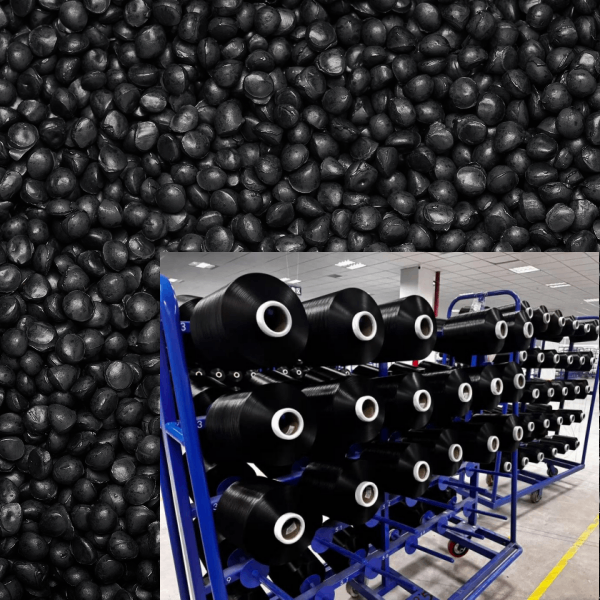
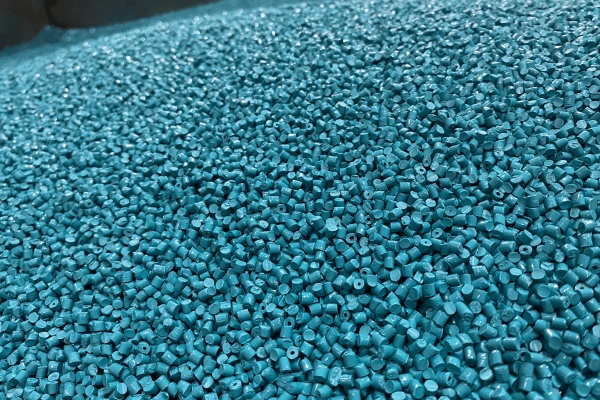
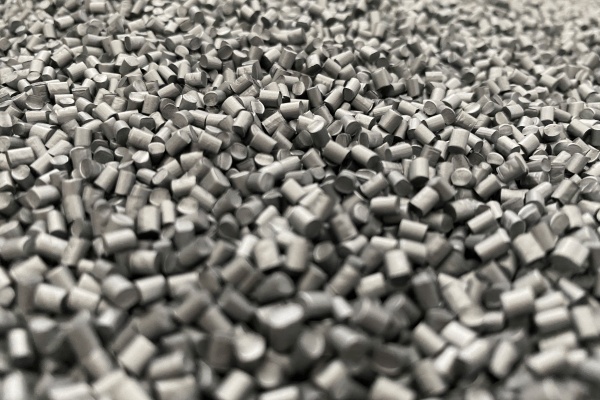
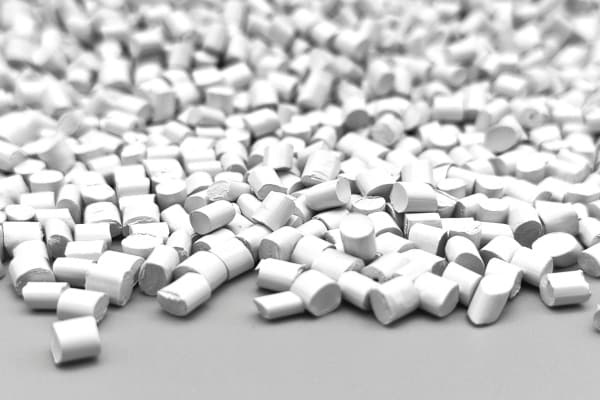
In a plastics compounding process, the masterbatch composition has to be designed based on the formulations of the plastics used.
Some common additives that may be required for compounding are:
Glass fiber
Mineral fillers
Flame retardants
Impact modifiers
These components are similar to a crowded room in which people hinder you from reaching the other side – they interfere with pigment dispersion.
Modified Nylon Materials have various applications in engineering plastics, such as:
Some typical features expected from these materials are:
Due to this, many users prefer using black masterbatch in nylon compounds and color masterbatch in PA6 compounds for consistent coloring.
In case of glass fiber reinforced nylon, the masterbatch should have better dispersion capacity.
Modifications to PP and PE materials are employed extensively in:
Appliance products
Structural components in industry
Pipes and tubing systems
In such systems, most customers opt for gray masterbatch for PP material or masterbatch for reinforced polypropylene.
The key functions of masterbatch in these cases are:
Color consistency
Process efficiency
Process stability
Masterbatch design is essential for mineral-filled PP compounds.
ABS modified materials are typically used in:
Home appliance housings
Electronic devices
Consumer products
In these applications, companies typically need color masterbatch for ABS compounds or masterbatch for ABS engineering plastics.
The main roles of masterbatch here are:
Providing uniform color
Preventingblack specks
Maintaining surface gloss
In the case of the choice of suppliers of masterbatch for modified plastics, the most important aspect for customers is the technical expertise, not the price.
Our custom masterbatch formulas are specially developed for compounds for different compounding systems.
Using the pre-dispersion technique, we increase masterbatch dispersion during the compounding of plastics.
The masterbatch concentration may reach 70% reducing the addition ratio.
We use Japanese-imported color spectrophotometer to control the ΔE stability. Color difference can be maintained at the level of DE < 0.3.
Our sampling can be done in 3–5 days, allowing the quick verification of formulations.
Being the engineering plastic masterbatch manufacturer, we have been serving for many years: Companies producing modified plastics Engineering plastics Injection molding manufacturers Thus, we know the requirements of the compounding industry better than anybody else.
Various compounded materials require various carriers, e.g., PA carrier masterbatchPP carrier masterbatchABS carrier masterbatchA proper choice of carriers helps in dispersing masterbatch in compounded plastics.
In order to reduce the effect of masterbatch on material properties, we usually suggest using high concentration masterbatches.
The concentration of masterbatch may be up to:40% – 70%The high concentration formulation lowers the addition rate, without changing the color.
Pigment dispersion in highly-filled compounds is more difficult compared to that of standard plastics.
A multinational auto parts company uses modified material based on PA6 + 30% GF.
Prior to using our product, they had been using American masterbatch imported by them, which was very expensive.
We have produced black masterbatch for nylon materials for their needs.
Result:
100% replacement ratio
30% lower cost
This product was then implemented for wide production application.
A household appliances manufacturer makes mineral filled PP modified material.
They used to use pigment powder in their formula and gray parts were not consistent in terms of color.
For them, we created a gray masterbatch for PP compounds.
Results of improvement:
ΔE below 0.5
Significant improvement in color consistency
Increased production efficiency by 15%
We believe clarity leads to better collaboration. Here’s what you need to know before getting started, including minimum order quantities and typical production timelines.
Small custom masterbatches quantity: 25KG
Fully original development: Fee
Samples for evaluation: available upon request (some free, some paid depending on project)
Can be flexibly used for small-batch production and regional releases.
Let’s talk.
Sampling: 3-7 working days
Mass Production: 1.5-4 weeks (depending on the complexity)
Shipping: 5–15 days by air / 30–45 days by sea
We ship globally and assist with export documentation.
Well-formulated masterbatch for engineering plastic normally won’t have any significant effect on material property.
Normally it is 1% - 4%, based on masterbatch concentration and required color.
Yes, we recommend using a high-dispersion masterbatch for highly filled compounds.
As nylons process at high temperatures, special heat-resistant pigment system is required.
Generally there is almost no influence on flowability.
Yes, we can formulate custom-color masterbatch for engineering plastics.
Yes, but we recommend performing a small-batch test before mixing them.
Main factors for evaluation:
Dispersion capability
Technical support capability
Supply capability
Stay ahead of packaging trends with expert insights, material breakdowns and compliance updates. These resources are curated for beauty brands building a more sustainable future.