

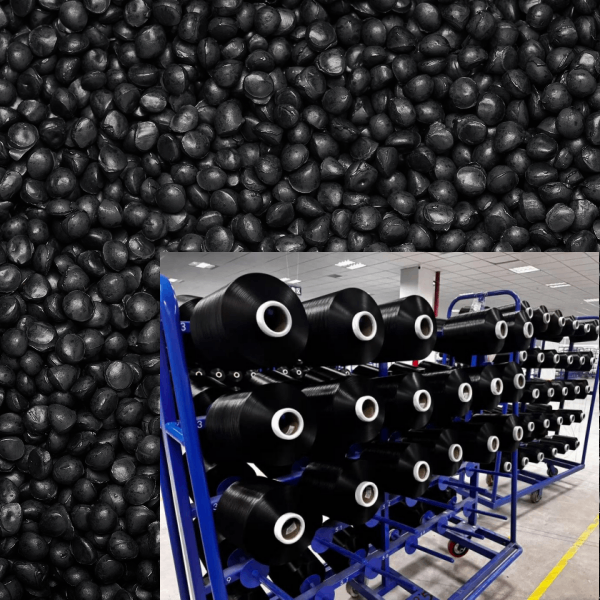
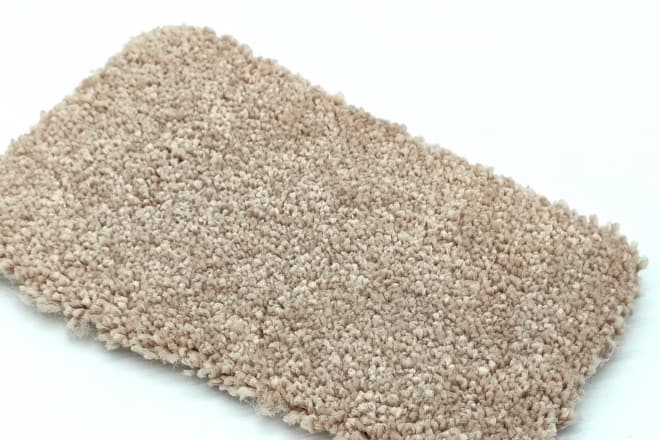

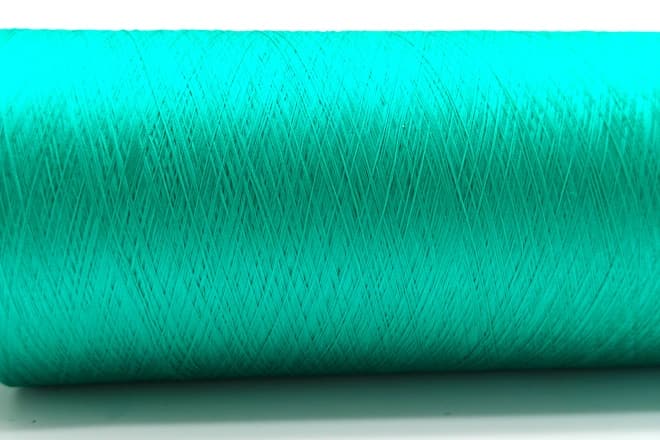
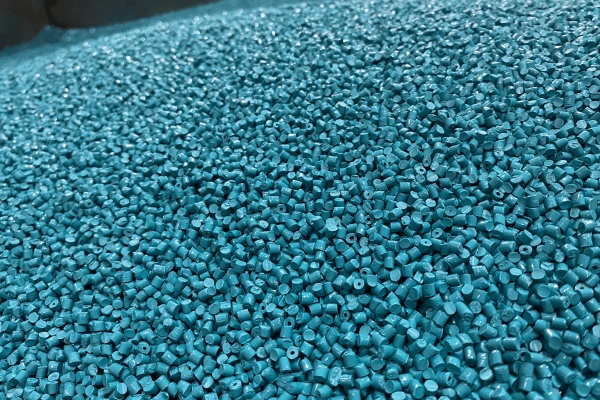
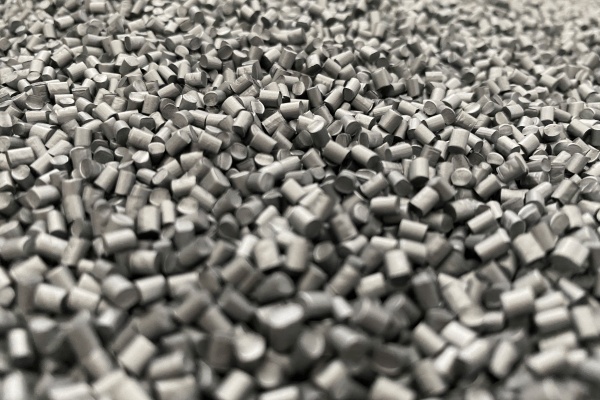
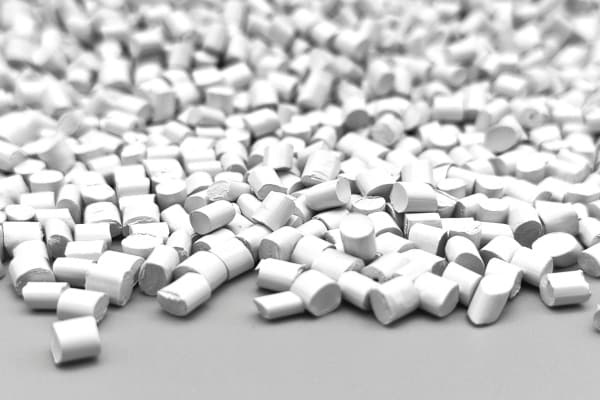
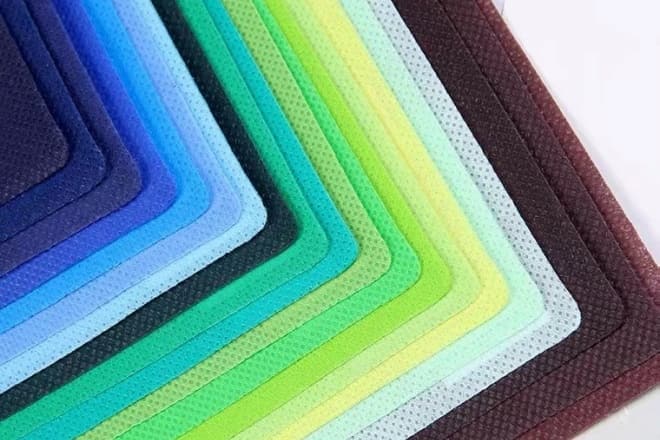
Injection molding companies concentrate most of their efforts on tools, equipment, and process parameters. But one essential element is frequently overlooked – Injection Molding Masterbatch.
Actually, color masterbatch has far more functions than just “providing the product with color.” Its impact includes melt flow, pigment dispersion, processability window, surface appearance, and yield rate.
According to our almost 20-year project practice, we see that most of the clients come to us for the first time not due to inability to “match the color.” They face these issues while producing:
✓ Black dots or crystal points on the surface of the product
✓ Obvious color variation on high gloss products
✓ Uneven color across different batches
✓ Color becoming yellow with slightly increased injection temperature
✓ Mold contamination causing interruption of production to clean up the mold
✓ Reduced yield rate and increasing inefficiency of production
Injection molded parts made for refrigerators, air conditioners, washing machines, and domestic products usually make use of ABS, PP, or HIPS as the materials for their parts. High demands in terms of color uniformity are always necessary. The slightest color difference that appears in each batch is highly apparent when applied to large, glossy surfaces.
From our experience, pigment dispersion, heat stability, and black specks are some of the parameters considered.
Interior parts of automotive, bumper parts, doors and instrument panels are subjected to high heat and sunlight and also operate under challenging conditions for long periods of time.
Hence, during the development of formulations, we take into account heat-resistant pigments, weathering resistance systems and compatibility with different types of engineering plastics, thereby assuring color stability of the end products.
Household items such as storage containers, chairs, garbage bins, kitchen utensils, among others, are usually manufactured in huge quantities. Efficiency is crucial.
We fine-tune the flow and distribution system of masterbatches depending on our client’s machinery. This helps in quick coloring and reduces color change-over time. It eliminates flow marks, black specks, and color streaking.
When it comes to launching a new product or refreshing a hero line,te right packaging partner makes all the difference.Here’s why brands around the world choose to work with us.
While many vendors will just give you samples of colors, our priority lies in the processing procedure of the client. Before coming up with the formula, we usually get knowledge about the resin being used, the injection molding machine, processing temperatures, mold construction, and final products.
Black spots don’t always originate in the machinery. On the contrary, most times, they arise due to inadequate dispersion of the pigment. We have high-performance dispersing techniques and an optimized formulation system that makes it possible for the pigments to be well-dispersed in the resin and this helps reduce the black spots and color variations.
For materials processed at high temperatures like ABS, PC, PA, and PBT, pigments that have higher thermal stability are chosen. This ensures that the final products do not change colors while undergoing processing.
Our goods have been exported to various places around the world. We know the environmental, packaging, and logistics standards of various countries. We provide shipping by sea, air, and land. We can react swiftly to the needs of our overseas customers in project development and bulk shipment.
One of our strengths is this particular capability. Color uniformity is just the bare minimum. We have developed an entirely comprehensive system for managing the raw materials, formulation data base, and quality system ISO 9001. All batches of product are tested for color, dispersibility, and processability. It helps our clients to ensure long-term production stability.
We do not only give you sample work but also give application advice. Our service continually refines our coloring agents, addition ratios, time frames for processing, and resins through customer input to make your project go into mass production.
PP, ABS, PC, PA, PET, PBT, and other materials have their own processing temperatures and flow characteristics. That is why different resin carriers and pigments are developed – not just one universal system for all materials.
The firm follows the ISO 9001 management system strictly.
Right from material inspection, compounding, pelletizing, sample retention, up to the testing of finished products — everything is done according to standard operating procedures.
Along with the lab testings, we perform the verification of the results on the client’s production line as well. It encompasses the testing of dispersion, process stability, color uniformity, and heat resistance.
The requirement from the client was to have fewer black specks and higher dispersion for high gloss white housings. We were able to assist our client in reducing appearance defects and also validating for mass production through formulations.
The client had suffered from defectively high levels of defects with the use of injection molding for quite some time now. We were able to re-engineer their master batch carrier system and improve dispersion. This has led to better processing stability, and we have made our way into their core supplier list.
We believe clarity leads to better collaboration. Here’s what you need to know before getting started, including minimum order quantities and typical production timelines.
Small custom masterbatches quantity: 25KG
Fully original development: Fee
Samples for evaluation: available upon request (some free, some paid depending on project)
Can be flexibly used for small-batch production and regional releases.
Let’s talk.
Sampling: 3-7 working days
Mass Production: 1.5-4 weeks (depending on the complexity)
Shipping: 5–15 days by air / 30–45 days by sea
We ship globally and assist with export documentation.
No. Each resin type demands a carrier for appropriate dispersion and processability.
They could have been due to masterbatch, raw material contamination, or remnants left in the equipment. Full evaluation would be required.
Because pigments which lack heat resistance would suffer from heat degradation. High temperature formulations need to be chosen then.
As the surface is more susceptible to changes in color. Hence, there is a need for better pigmentation dispersing and batching process.
There will be no effect on the product strength when using low amount ratio of Injection Molding Masterbatch. Excessively high ratio might lower some aspects.
It is advised that you evaluate their experience with resins, formulation, consistency, and technical support.
Stay ahead of packaging trends with expert insights, material breakdowns and compliance updates. These resources are curated for beauty brands building a more sustainable future.