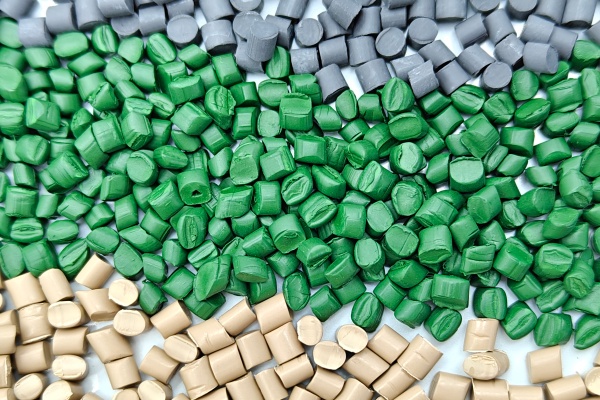
TPU resin, broadly known as thermoplastic polyurethane elastomer, refers to an advanced kind of resin that can be plasticized in its molten form when subjected to elevated thermal conditions, yet retains an elastic nature when subjected to normal room environments. It is the ideal blend of the processing advantages of plastics, combined with the exceptional physical properties of rubber, making it an essential part in the development of lightweight, yet durable products.However, the world of materials offers a wide range of choices. Whether you are an engineer looking to understand material properties or a buyer dealing with different materials every day, a simple comparison can help you better understand TPU.
In actual applications, more and more manufacturers are choosing to replace TPE or traditional rubber with TPU. This is not because the material parameters of TPU are superior to those of TPE, but because of the actual differences between the two after long-term use.For example, a manufacturer of smart wear devices initially chose to use a kind of TPE, which is based on SEBS, for its wristband. Although the material parameters of the TPE met the standards, problems such as stickiness, loss of elasticity, and tiny cracks on the edges began to occur after 6-8 months of mass production.In 2023, the manufacturer replaced the material with a kind of Shore 85A polyether-based TPU and re-verified the technology while keeping the same structure. The results showed that the wristband remained intact after being tested for 150,000 times, and no obvious exudation and adhesion were observed after being soaked in artificial sweat. The customer complaints were reduced by more than 40%.
The performance of TPU stems from its unique microphase separation structure. TPU is composed of two parts, where hard parts are used to provide strength, hardness, as well as high-temperature properties, and soft parts are used to provide flexibility and low-temperature properties.Such a structure makes it possible to withstand high loads as well as large deformations simultaneously.
Excellent abrasion resistance and oil/chemical resistance are perhaps the most outstanding characteristics of polyester-based TPU.
From our tests carried out, it can be deduced that polyester-based TPU offers abrasion resistance of about 20-30% higher compared to polyether-based TPU when both have the same level of hardness.
You may not really get the feel of this kind of data, but you can take a look at the excellent results that the polyester TPU shows in an industrial setting under continuous friction and high load conditions.
One of our partner manufacturers, which produces automated logistics solutions, conducted a comparative test with two different materials with the same Shore 95A hardness in a high-speed sorting system, used in conveyor rollers and guide wheels.
The materials tested were the polyester TPU and a traditional composite material made from rubber.
After 1200 hours of continuous use, the diameter wear of the rollers made from TPU was under 0.3 mm, while the rollers made from the traditional composite material showed significant wear and edge cracks, requiring replacement at an earlier time.
In this case, the client was able to extend the time between roller replacements from 3 months to 9 to 12 months by using TPU material.This is why polyester-based TPU is often the preferred option in areas such as conveyor belts, rollers, timing belts, and high-wear-resistant seals.
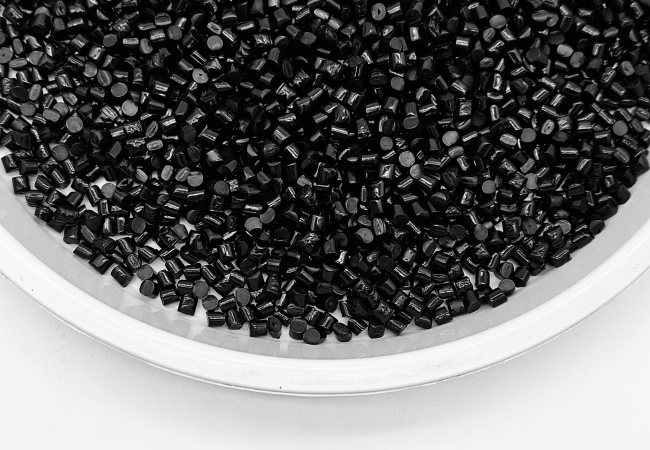
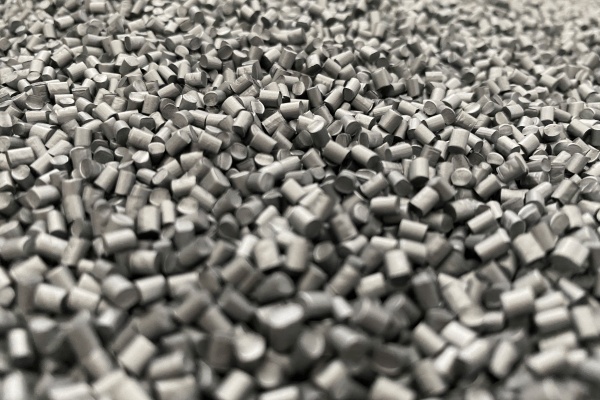
Polyether TPU has excellent hydrolytic resistance and low-temperature flexibility. If your product will be exposed to a humid condition with water for a long time, it is better to use a polyether-based TPU, while a polyester-based TPU will lose its excellent properties in such a condition for its low hydrolytic resistance.
The benefit of hydrolysis resistance is often only realized after a period of use. I personally know an outdoor cable and conduit producer who initially chose polyester-based TPU as the material for the sheathing of a product in the southern coastal area, and it had good short-term mechanical properties.
But after 12-18 months of use in a high-humidity and temperature cycling environment, it had obvious hardening, with a marked reduction in tensile strength and elongation.
It was determined that the primary cause of the problem was the hydrolysis reaction of the polyester segments.Later, the factory changed the material to polyether-type TPU. Under the same conditions, the product has been operating stably for more than 36 months and has not encountered any failure problems like before.T
hese practical examples clearly show that in products with high humidity environments, the type of material used often has a direct relationship with the service life of the product.Polyether-based material is indicated in the material list of cable sheath, water sports, and medical catheters.
Because there is no benzene ring in aliphatic TPU, it shows superior resistance to UV light, and it’s anti-yellowing. Thus, it can retain color and transparency for a very long time. It is widely used in outdoor/automotive exterior/transparent products (such as car wrap film, transparent mobile phone cases).And aromatic TPUs, which are relatively cheap but not resistant to yellowing, are used in black or opaque interior products.
Though Aliphatic TPUs are generally more expensive than aromatic TPUs, the premium paid for the better look and durability is absolutely worth it. The benefits of these materials usually do not become apparent in the short term, but rather show a clear difference after a prolonged period of exposure to the outdoors.
During market testing, a certain brand of automotive paint protection film rolled out two transparent products made of aromatic TPU and aliphatic TPU simultaneously.
For the first six months after the delivery of the products, there was no difference in their appearance. However, after 18-24 months of exposure to the outdoors, the aromatic TPU product tended to yellow to varying degrees, while the aliphatic TPU product had high light transmittance and clarity.
As a result of this test, the company has switched entirely to aliphatic TPU in its high-end model line, even though it is more expensive, as it is still deemed a necessary outlay for the sake of product appearance stability and brand value.
When it comes to physical properties, both manufacturers and users are most concerned about hardness, as hardness largely determines the range of products that can be made from the material.
The table below shows that TPU has an extremely wide hardness range, which explains its widespread application:
Tensile Strength and Elongation at break are the maximum force per unit area that TPU can withstand when it is broken, and the percentage of the length it extends. They indicate the toughness of TPU from two dimensions.
As someone who has worked in this industry for many years, I can confidently tell you that excellent TPU should possess both of these properties, which means it can absorb enormous amounts of energy without easily breaking.
Imagine a folding phone hinge cover; in such a dynamic and repeated bending scenario, these two indicators are even more important than hardness.
If you are a buyer for a processing plant, the thermal properties of TPU are an important indicator for you, as they directly determine the smoothness of the production process and the quality of the product.
TPU has a smaller melt processing window ( typically between 180°C and 220°C )than other plastics , therefore requiring extremely high temperature control precision from processing equipment.
This is the safe production zone for a qualified product: too low a temperature will result in poor melt flow and incomplete filling; too high may cause thermal degradation of the material, leading to yellowing and performance deterioration of the product.
In actual production, the stability in TPU processing is also related to the degree of equipment and process control. The feeling of some processing plants that TPU is "difficult to process" is often due to a lack of proper temperature control or drying process.
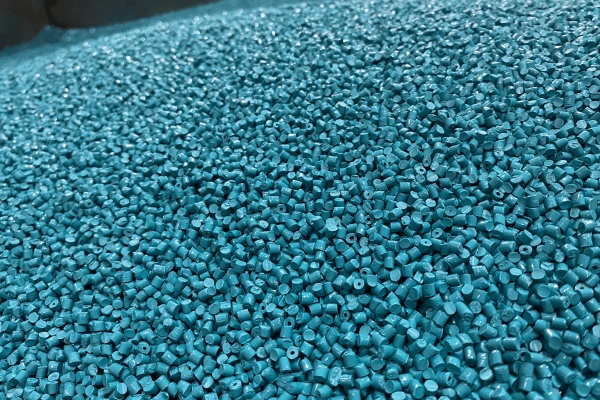
A certain injection molding plant had a defective rate approaching 8% in processing aliphatic high transparency TPU, which mostly showed up as silver streaks or local yellowing.
The material supplier adjusted the drying time to 4 hours, reduced the barrel temperature, and increased the mold temperature, which significantly decreased the defective rate.
This case also proves that TPU is sensitive to process parameters, but stable and high-yielding production can be realized by proper control.
If you need to mass-produce delicate parts or small items, injection molding is definitely your first choice.
Imagine injecting molten TPU precisely into a mold, and within seconds, a perfect phone case or car seal is born.
The automated molding line and numerous sophisticated machines ensure both the quantity and quality of the products.
If you need long tubes or thin films, then extrusion technology comes in handy.
TPU is extruded from a small hole; rounding it creates a water pipe, while flattening it creates a film that can be used to wrap electrical wires as a protective sheath.
Besides its remarkable flexibility, the extrusion process itself causes minimal damage to TPU, preserving its suppleness.
If your product is a hollow bottle or an air bladder, consider blow molding.
Various types of complicated container forms can be created by using compressed air to inflate TPU which is heated and softened.
Productions with a good distribution of wall thickness and seamless structures can be created as a result.
Examples of such productions are sports water bladders, medical fluids, and airbags.
If you have unique, personalized needs, 3D printing is your best choice.Using FDM technology, TPU filaments can be stacked layer by layer to create complex lattice structures and customized flexible components that are difficult to achieve with traditional processes.
This digital manufacturing method is particularly suitable for small-batch prototyping, medical orthotics, and the production of personalized sports equipment, achieving a perfect combination of design freedom and functionality.
Although you may not realize it, TPU is everywhere in your daily life.
TPU has a wide range of applications in footwear and apparel (sole, upper), industrial manufacturing (sealants, conveyor belts, rollers), and consumer electronics (phone cases), providing manufacturers with a lightweight and high-quality material option.
Getting featured with bio-based TPU produced with renewable resources such as castor oil helps brands develop low-carbon products driven by increasing global needs for environment-conscious consumption habits.
In the meantime, following the development of Mono-material Design and recycling technology, it is gradually realizing a "100% closed-loop circular economy" for TPU products to reduce the environmental footprint.
In terms of practical application, bio-based TPU is not only a move towards environmental protection but has already reached a balance between performance and sustainability.
Since 2024, a sportswear brand in Europe started to gradually replace the coating material of their shoe uppers with TPU with about 30% bio-based content and gained ISCC PLUS certification.
This material, without modifying the original structural design, has the same key properties as traditional petrochemical-based TPU in terms of flexural strength and abrasion resistance but with a reduction of about 20% to 25% in the carbon footprint of the product.
For enterprises aiming at the international market and fulfilling environmental protection regulations and brand sustainability strategies, Green TPU is gradually shifting from a "bonus" to a "necessary option."
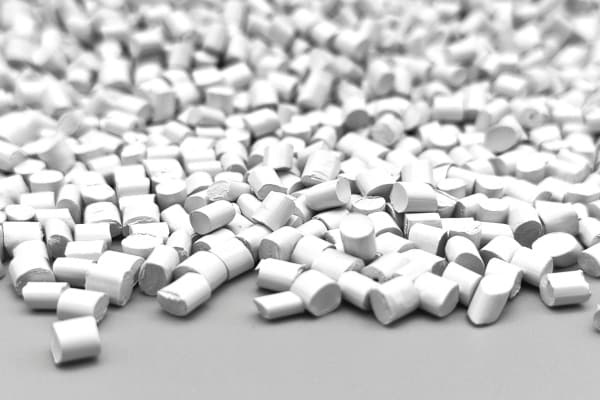
In the automotive industry, car wraps made of aliphatic TPU can provide long-lasting protection for vehicle paint; EV battery swelling films and flexible busbars are used for insulation and thermal runaway protection within battery packs.
In the fields of smart wearables and healthcare, medical-grade TPU resin that meets the ISO 10993 standard can be safely used in indwelling catheters, infusion tubes, and wearable medical sensors; while in the wristbands of smartwatches/bands, TPU provides a combination of comfort and reliability.
In addition, TPU cast film, blown film, coated film, and TPU nonwoven fabric are also emerging TPU applications in recent years.
A good supplier not only offers reasonable prices and technical strength, but also lets you know whether they can quickly customize special colors or performance for you, whether the quality is stable (whether they have special industry certifications), and pay attention to their "green strength".
I recommend that you choose a supplier with rapid prototyping capabilities (within 2 weeks) and the ability to offer bio-based/recycling options. And be sure to conduct an on-site inspection of their laboratory and production facility before signing a contract.
The price difference of TPU mainly comes from four aspects:
1. Raw material type (polyether type is more expensive than polyester type, aliphatic type is more expensive than aromatic type);
2. Special certifications (medical grade, food grade, and flame-retardant certifications will incur additional charges);
3. Customization level (a formula specifically developed for you is naturally more expensive than a standard product);
4. If environmentally friendly raw materials are used or recycled materials are processed, the price will reflect these "green values".
Years of experience in the industry have taught me that the best way to control costs is to avoid paying for unnecessary performance, like aromatic standard grades can be used for indoor black products; do not pursue high-level certifications unless necessary; at the same time, some manufacturers around me offer price discounts of 8-15% when signing annual framework agreements.
When you get the technical specifications, don't just look at the hardness on the first page! Pay more attention to these three items: compression set, tear strength, flexural strength.
You can directly tell the supplier how your product will be used and ask them to provide targeted suggestions and real-world scenario data: for example, for seals, focus on compression deformation data at 70℃ for 22 hours; for flexible products, request a 100,000-bending test report.
The European Union is set to introduce the digital product passport program, under which it is mandatory to track the material composition, carbon emissions, and recyclability of the product.
Major brands perform audits on their providers, checking if the providers' practices align with environmental protection practices and employee welfare practices. Selecting the right providers will prove beneficial in the long run.
In order to guarantee access to these markets, it is obligatory to give priority to suppliers who have achieved ISCC PLUS, who are in the position to provide a report on their carbon footprints, and who have passed ESG audits by third parties. with the necessary documents related.
As a practitioner, I have witnessed firsthand how TPU has evolved from a single material into the core of cross-industry solutions.
And TPU continues to evolve towards greener and more diversified trends; I look forward to exploring further possibilities of this extraordinary material with you.